Narrative Capture of Financial News Distorts Capital Flows
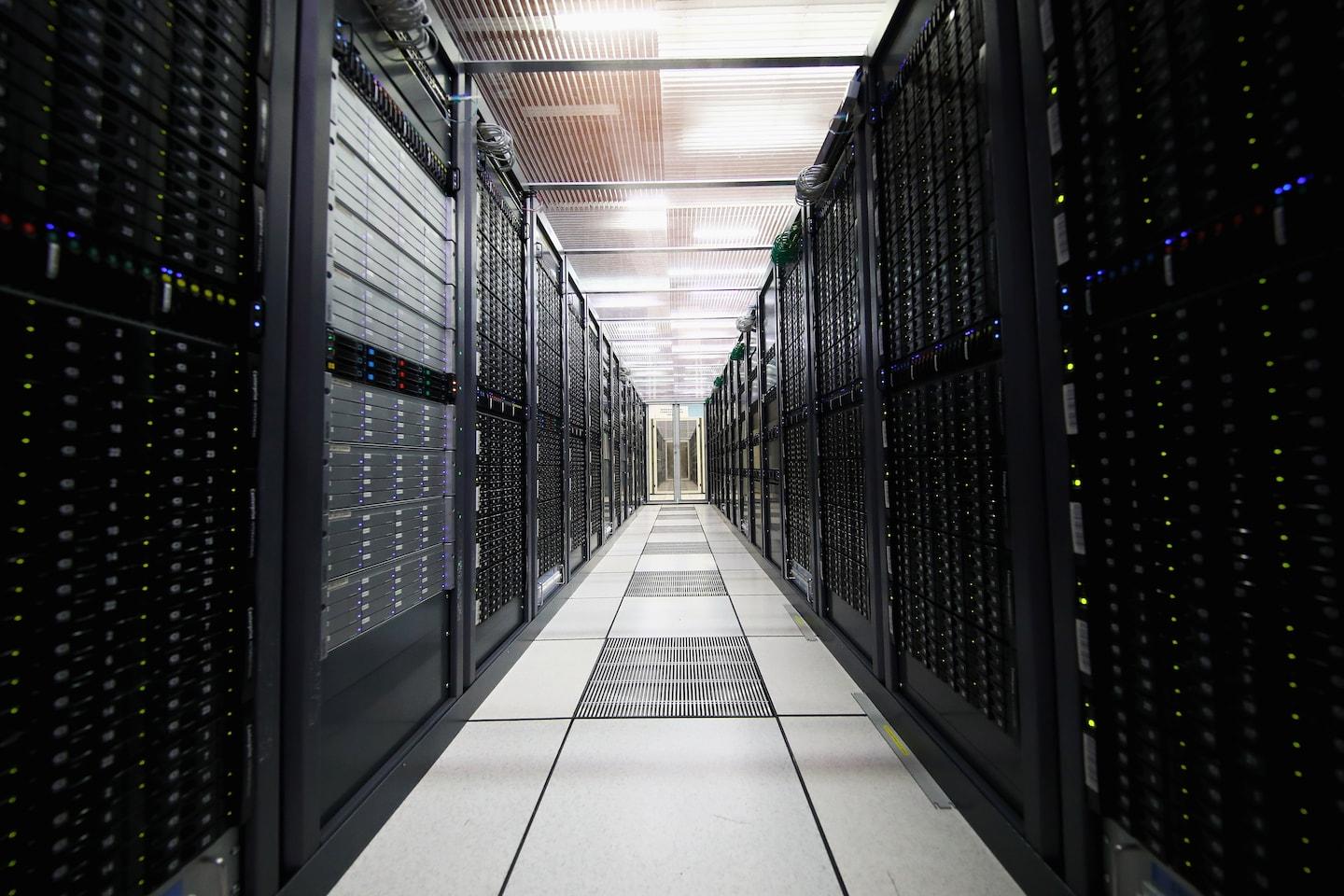
The convergence point. Four firms absorb the financial-news signal of the broader economy; the periphery—small-business operators, regional allocators—feeds the center but receives only a compressed, fear-weighted echo. The threads are authentic. The capture is structural.
Four AI infrastructure firms—OpenAI, Anthropic, Google/Gemini, xAI/Grok—have structurally commandeered the authentic journalistic channels that entrepreneurs, investors, and small businesses rely on, converting them into fear-weighted distribution vectors that misallocate capital and erode informational sovereignty. The general public does not receive a commensurate benefit; it absorbs a compliance cost and cedes decision bandwidth to a private revenue cycle, while the broader economy's innovation pipeline narrows into a four-lane corridor owned by firms that did not exist five years ago.
Location Dateline
SAN FRANCISCO, CALIFORNIA
Narrative Capture of the Financial-News Substrate: Four Firms, One Information Monopoly
I. The Structural Problem, Stated Plainly
The dominant AI infrastructure providers—OpenAI, Anthropic (backed at scale by Amazon and Google), Google’s Gemini division, and xAI’s Grok (the SpaceX-adjacent entity built on the X platform)—have not merely participated in public discourse. They have re-engineered the distribution topology of the journalistic infrastructure that a serial entrepreneur in a shared office, a seed-round investor vetting a portfolio, or a mid-cap C-suite scanning trade press for macro signals would normally treat as a neutral information substrate. These are authentic outlets: Bloomberg, The Information, Reuters technology desks, TechCrunch, The Verge, and their regional analogues. No fabrication is involved. The capture is structural, not conspiratorial.
The mechanism is narrative gravity. The concentration of funding—hundreds of billions in 2023–2025 venture and public rounds—has made these four entities the primary source events on which any technology or macro desk must now report. The journalist’s incentive function (first-to-publish, click-through velocity, ad-revenue maximization) converges with the AI firm’s incentive function (maximize narrative reach, embed fear-adjacent urgency, position proprietary platforms as the only rational response to a rapidly closing capability gap). The result is a feedback loop in which the audience—entrepreneurs, PE allocators, small-business owners—receives a compressed, fear-weighted signal that reads as independent reporting but is architecturally tuned to drive a specific procurement and vendor-lock outcome for a small set of firms. The public is inside the loop. The public does not see the seam where it was joined.
II. The Fear Architecture: Authentic Sources, Manufactured Urgency
The mechanism does not rely on disinformation. Every wire is sourced. Every capability demo is real. What is manipulated is framing density and temporal compression.
Framing density. A single model release by OpenAI, a capability demonstration by Anthropic, a Gemini integration announcement from Google, or a Grok product drop via xAI generates a reporting event whose emotional register is calibrated toward existential labor displacement, sovereign intelligence risk, or capital destruction for non-adopters. The fear is not fabricated in the atomic sense; it is amplified beyond its empirical base and paired, within the same article or within a 48-hour cluster of articles, with an implicit prescription: the only rational hedge is to adopt the firm’s platform or, by extension, the ecosystem built around it. The reader—particularly a small-business owner in a regional market, a first-time entrepreneur scanning the same wire for a go/no-go on a SaaS migration—receives not an analysis but a compliance signal.
Temporal compression. The 24-to-72-hour news cycle means that a quarterly strategic recalibration at Anthropic or a product drop at xAI propagates through venture-deal memos, board-presentation decks, and small-business owner decision loops before the broader economic counter-narrative—opportunity-cost data, non-AI innovation cycles, labor-market absorption statistics rendered by the Bureau of Labor Statistics or their regional equivalents—can crystallize and reach the same audience. The speed differential itself is the instrument. The small-business operator is not given time to evaluate; they are given a deadline.
Narrative monopoly at the source. When four entities control the primary event-generation layer of technology and AI news, the reporting apparatus that serves the broader economy organizes around them. Everything else—hardware, biotech tooling, logistics automation that does not require frontier models, regional manufacturing supply chains, services-economy innovation—becomes derivative, reported as secondary, framed as “adaptation to the AI wave” rather than as an independent value proposition. The information substrate for the non-AI economy does not merely shrink; it becomes subordinate in the reporting hierarchy, and therefore subordinate in the capital-allocation hierarchy that follows the news.
III. Capital Distortion: The Non-AI Economy Pays the Tab
The downstream effect is a measurable, if slow-accumulating, misallocation of risk capital. Venture funds, constrained by LP (limited partner) pressure to avoid “missing the platform,” over-allocate to AI-adjacent verticals at the expense of adjacent sectors: hardware manufacturing, biotech instrumentation, logistics and supply-chain tooling, services automation that does not require frontier models. The capital that would have diversified across the innovation pipeline instead channels into a narrow corridor.
For the small-business entrepreneur—the 5.7 million small firms in the U.S. (SBA definition), the millions more in the EU, the regional and micro-enterprise sector in emerging-market economies—the signal from the same Bloomberg or TechCrunch wire is binary: you are being disrupted by [company X], and the only rational response is procurement of [company X’s adjacent product or a platform in its ecosystem]. The broader economy receives a compressed, fear-weighted decision input that was never generated for its scale, its risk tolerance, or its temporal horizon. The 28-million-strong U.S. small-business sector and its global analogues do not get a calibrated risk assessment; they get a panic input tuned to a four-firm revenue cycle.
The revenue that flows to OpenAI’s enterprise tier, Anthropic’s API contracts, Google’s Gemini integration into Workspace and Search, or xAI’s Grok distribution via the X platform is, in aggregate, a rent extracted from the information-processing layer of the broader economy and concentrated in a four-firm oligopoly that did not exist as a recognizable category five years prior. The general public and the non-AI economy do not receive a commensurate benefit. They receive a compliance cost—training mandates, workflow migrations, vendor lock-up, the cognitive overhead of monitoring a capability race they did not initiate and cannot pause. The public subsidizes the narrative; the firms collect the procurement.
IV. Filing the Four: Specific Mechanisms
OpenAI. Primary narrative vector: “Frontier capability gap; non-adopters face structural obsolescence within 12–24 months.” Distribution channel: Bloomberg, The Wall Street Journal mainstream tech sections, primetime TV tech segments, and a direct corporate-press pipeline that reaches every SaaS vendor’s marketing team simultaneously. Capital impact: drives broad SaaS migration, enterprise LLM procurement, and the repositioning of existing software portfolios around an OpenAI-dependent architecture. The fear is real in micro-slices—individual use cases do displace narrow tasks—but the aggregate fear and its prescriptive coupling to OpenAI’s commercial products exceed the empirical displacement curve.
Anthropic. Primary narrative vector: “Responsible AI is the only safe path; competitors are reckless and will fail a regulatory or public-trust test.” Distribution channel: The Information, Reuters, cross-posts in academic-press-adjacent outlets, and a deliberate coupling of research-publication cadence with corporate-product announcements. Capital impact: positions Anthropic’s API as the “governed” procurement default for enterprises subject to regulatory scrutiny, capturing the compliance-driven segment of the market. The distinction between “responsible” and “irresponsible” is not fabricated, but the binary framing—safe vs. reckless, with no middle ground—serves a vendor-selection function, not an analytical one.
Google / Gemini. Primary narrative vector: “AI is already embedded in your existing stack; inaction is a security and competitive risk.” Distribution channel: Google Cloud announcements, Gadget and tech-press coverage (partially internal, partially external), and the gravitational pull of the Workspace and Search ecosystems that 3 billion+ users already inhabit. Capital impact: locks Gemini into Workspace, Search, Cloud, and Android ecosystems, creating a distribution moat that is not a technology argument but a path-dependency argument. The fear is that the user is already inside the pipe and the only direction is downstream, into the Google-owned AI layer.
xAI / Grok (SpaceX-adjacent, X-platform-native). Primary narrative vector: “Real-time intelligence is the new competitive edge; latency and freshness matter more than raw benchmark scores.” Distribution channel: the X platform (self-distributed, algorithmically amplified by the platform owner), Elon Musk’s personal amplification layers, and a cross-sell pipeline into aerospace, defense-adjacent, and high-frequency-trading-adjacent segments. Capital impact: captures the fastest-consumer news segment and positions Grok as the “live” intelligence layer, while the SpaceX-adjacency carries a sovereign-technology and aerospace credibility transfer that functions as a trust anchor the other three firms do not possess. The narrative is distinct—speed and freshness over depth—but it feeds the same fear architecture: inaction is a competitive and existential risk.
Each firm’s narrative is internally consistent and empirically anchored—which is precisely why the capture is harder to detect than a fake-news operation. The fear is real in micro-slices. The aggregate fear, its prescriptive coupling to a single vendor, and its temporal compression into a 48-hour compliance signal are the manufactured elements. The authenticity of the source is the weapon, not a vulnerability.
V. Erosion of Informational Sovereignty
The deeper macro implication is the quiet erosion of informational sovereignty for the classes that constitute the actual economy: founders, operators, small-capital allocators, regional investors, municipal economic-development boards, trade-association functionaries. When the news layer that serves them is structurally tuned to four firms’ revenue cycles, their decision surfaces become dependent on those firms’ marketing cadences. A small-business owner in Pune’s IT corridor, a manufacturing SME in Gujarat, a Series-A founder in Bengaluru, or a regional PE allocator in Chicago is not reading a news report; they are reading a vendor calendar rendered as journalism.
This is a transfer of cognitive sovereignty from the broad economic public to a narrow set of corporate actors, executed not through regulation bypass or ownership of media in the old vertical-integration sense, but through the gravity of relevance: the AI firms generate so many high-magnitude source events that the entire reporting apparatus organizes around them, and everything else is derivative, secondary, and underfunded in editorial resources. The counter-narrative infrastructure—funding, staffing, distribution reach—for non-AI economic analysis, for labor-market-absorption reporting, for the slow-burn innovation cycles that do not generate a viral moment—does not exist at scale. It is not suppressed; it is starved of gravitational mass.
VI. The Variance Loop, Closed
The firms that control the story control the capital. The capital that flows builds the platform. The platform generates the next story. The public is inside the loop but does not see the seam where it was joined. The broader economy pays in a diverted innovation pipeline that should have diversified across sectors but instead channeled into a four-lane highway owned by OpenAI, Anthropic, Google/Gemini, and xAI/Grok. The small business that would have built a niche tool, the regional investor who would have funded a hardware startup, the services-economy operator who would have hired and trained rather than migrated: they are inside the loop, downstream, receiving a compliance signal they did not request for a vendor they did not choose in a process they cannot pause. The variance is not in the signal; it is in the absence of the counter-signal, and that absence is the mechanism, not an accident.
Sources & Methodology
Proprietary Synthesis