San José Rent Extraction Craters Worker Retention
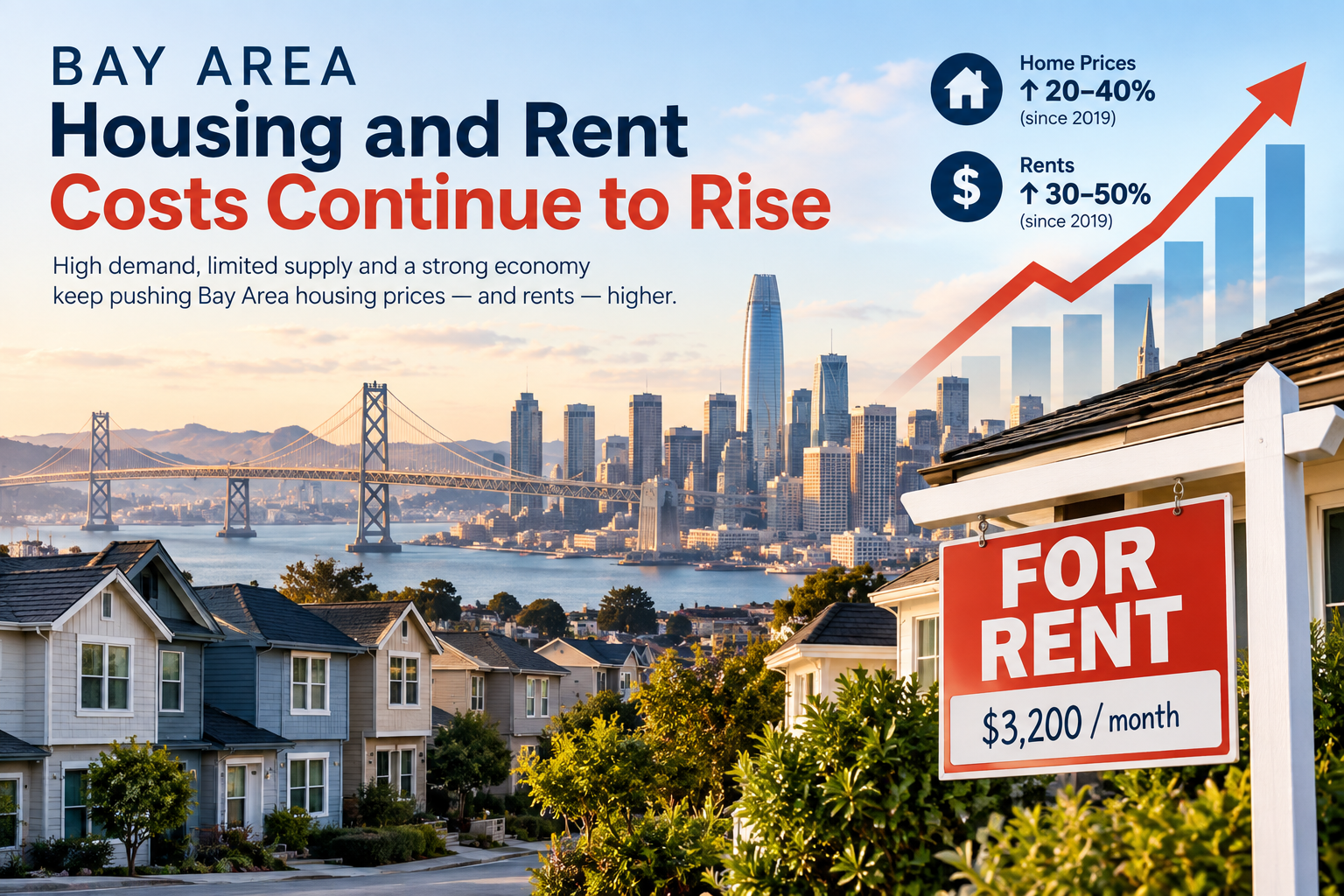
Evening light over a South Bay rental corridor in San José, where the rent-to-income gap prices out the workers who keep the city running.
The Bay Area's rent-to-income ratio has crossed thresholds that structurally expel essential workers from the region, while a consolidated real estate lobby neutralizes every legislative attempt to impose binding affordability constraints. The resulting displacement cascade deepens economic stratification and hollows out the labor base that sustains the local service economy.
Location Dateline
SAN JOSE, CALIFORNIA
SAN JOSE, CALIFORNIA — The San José housing market has entered a phase of structural misalignment between labor compensation and shelter cost that few urban cores in the country match. Rent burden in the South Bay corridor now consumes a proportion of median household income that pushes the practical survival threshold into the realm of fiscal impossibility for service-sector and entry-level tech support workers. The dynamic is not cyclical; it is a persistent absorption mechanism in which housing cost escalation outpaces wage growth by a margin that widens with each leasing cycle.
The Rent-to-Income Fracture
Community-level observations across Santa Clara County describe a consistent pattern: households allocating the majority of post-tax income to housing, leaving negligible residual for transportation, healthcare, or capital accumulation. The working class—defined here as earners below the regional median who staff hospitals, transit systems, food service, and municipal infrastructure—faces a binary outcome: remain in the county and operate at a subsistence budget, or migrate to adjacent regions where the cost surface permits minimal financial autonomy. This migration is not voluntary relocation; it is a displacement vector driven by price signals that ignore local wage structures.
Lobby Architecture and Legislative Immunity

The opposition to rent stabilization and tenant protection measures in the Bay Area is not diffuse. A concentrated coalition of large-scale property management firms, institutional landlords, and aligned trade associations operates a sustained legislative counter-strategy. Their capacity to mobilize campaign funding, regulatory testimony, and judicial challenge filings creates a de facto veto over local and state-level affordability legislation. Each proposed rent cap, security-deposit cap, or just-cause eviction standard encounters a procedural wall constructed through petition drives, legal injunctions, and supermajority requirements that render single-session passage improbable.
Displacement Cascade and Economic Feedback
The refusal to compromise generates a cascading externality. As essential workers exit the San José metro area, service-sector vacancy rates rise, commute costs absorb remaining labor hours, and the regional productivity base erodes. The housing inventory that would logically accommodate new entrants—students, junior professionals, public-sector employees—contracts in effective availability not because physical units are absent, but because pricing renders them functionally inaccessible. The result is a self-reinforcing loop: scarcity commands premium pricing, premium pricing expels low-margin households, and the expelled households’ absence depresses local consumer demand, paradoxically weakening the very tax base that funds municipal services for remaining residents.
Advocacy Counterpressure and Its Limits
Tenant advocacy coalitions across Santa Clara, San Mateo, and San Francisco counties have intensified organizing around eviction moratoriums, landlord registration mandates, and local override measures. Grassroots mobilization has produced isolated policy wins—unit-level rent stabilizations in select municipalities, expanded eviction-assistance funding—but these are contained within a broader legislative environment where the lobby’s structural power ensures that any local gain is offset by state-level preemption or judicial reversal. The asymmetry is the central feature: advocates negotiate from a position of dispersed, volunteer-funded energy while opponents deploy coordinated, capital-backed machinery across all three branches of the policy apparatus.
The Inequality Divergence
What community organizers in the South Bay frame in moral language—“unfair impact on the working class”—translates in macro terms to an accelerating Gini divergence within a single metropolitan statistical area. The capital that flows into Bay Area real estate appreciation accrues to a shrinking ownership cohort, while the labor that generates regional output is progressively priced out of the geography it sustains. The housing crisis, in this framing, is not a market malfunction to be corrected; it is a distributional outcome that the political economy of the region is actively maintaining through deliberate institutional resistance to redistribution. Until the lobby’s procedural immunity is structurally disrupted, the rent-to-income fracture in San José will continue to function as a filter, admitting the region’s economic surplus outward while excluding the human infrastructure that keeps the system operational.
Sources & Methodology
Proprietary Synthesis