Warsh's Jackson Hole: Guidance Dead, Inflation Trigger Live
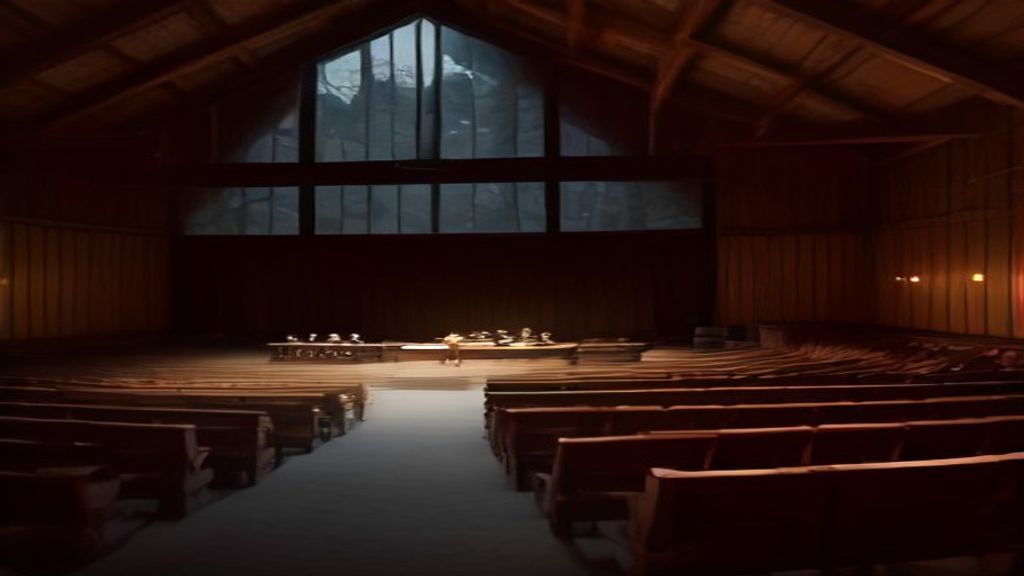
The Jackson Hole Economic Policy Symposium amphitheater, where Warsh's guidance withdrawal landed on a global capital audience without the usual rate-path anchor.
Fed Chair Kevin Warsh used his Jackson Hole address to dismantle conventional forward guidance while embedding a conditional tightening threshold tied to whether inflation converges toward 2% 'clearly and at sufficient speed.' The speech re-architects the Fed's communicative infrastructure from expectation-management toward reactive credibility, leaving markets without a predictable policy vector while inflation persists well above target.
Location Dateline
JACKSON HOLE, WYOMING
Warsh’s Jackson Hole: Guidance Dead, Inflation Trigger Live
JACKSON HOLE, WYOMING — Federal Reserve Chair Kevin Warsh walked into the Jackson Hole Economic Policy Symposium carrying a deliberate contradiction: a speech that simultaneously signalled hawkish intent and withdrew the instruments through which markets usually decode central-bank direction. The result is a structural fracture in the Federal Reserve’s communicative architecture that, if sustained, will force a repricing of how capital markets price monetary risk.
The Guidance Euthanized
Warsh’s central rhetorical move was negative. He refused to commit to a rate hike. He refused to sketch a forward interest-rate path. He refused, in any conventional sense, to tell the market where policy is heading next quarter or the one after. What he offered instead was a methodological justification: markets, he argued, have become pathologically dependent on anticipating the Fed’s next move, and that dependency itself distorts the transmission of monetary policy. Policymakers, in his framing, require the freedom to respond to shifting conditions without the gravitational pull of a pre-announced trajectory.

This is not merely a stylistic preference. It is a dismantling of the post-2008 forward-guidance regime that anchored rate-expectation curves for over a decade. By withdrawing the signal, Warsh has handed uncertainty back to the pricing engine of sovereign debt and equity markets. The conditional language he retained — that the Fed must be confident inflation is moving toward 2% “clearly and at sufficient speed,” otherwise “we have work to do” — functions as a trigger condition without a timestamp. Markets can identify the logic but cannot discount the timing, which is the point.
The Resilience Baseline
The stronger signal in the speech is not the hedged language but the economic assessment underneath it. Warsh described a broad cross-section of the economy as resilient:
| Indicator Set | Warsh’s Characterisation |
|---|---|
| Private investment | Resilient |
| Corporate profits | Resilient |
| Consumer spending | Resilient |
| Credit availability | Broadly accessible, not restrictive |
| Employment | Resilient |
| Inflation vs. 2% target | Well above target, no decisive convergence |
| Financial conditions (broad) | Not yet restrictive |

Read together, these are the preconditions for a tightening cycle that does not yet need to announce itself. An economy where spending, credit, and jobs all show resilience, layered over inflation that remains elevated, is the scenario in which a central bank can tighten from strength rather than react to a shock. The absence of restrictive financial conditions means the Fed retains policy space without having to manufacture credibility through a preemptive hike. The conditional threshold Warsh articulated — inflation must be falling “clearly and at sufficient speed” — is not a promise of future action. It is a standing order that activates automatically if the data do not cooperate.
The AI Productivity Interrogation
Beneath the monetary mechanics, Warsh embedded a longer-horizon warning that touches the structural distribution of returns from the current investment surge. He questioned whether the enormous capital flowing into artificial-intelligence infrastructure — model training, semiconductor fabrication, cloud compute, energy provision — will translate into broad-based productivity gains for workers, mid-cap businesses, and consumer price levels, or instead consolidate economic returns at the top of a narrow supply chain: a handful of laboratories, a limited set of chip manufacturers, cloud operators, and upstream energy providers. The question is not whether AI investment occurs. It is whether its output diffuses or concentrates, and whether that pattern is visible in the inflation and productivity statistics the Fed is monitoring. If returns concentrate, the Fed’s 2% target becomes harder to reach through labour-market channels while asset prices in the concentrated sectors inflate independently — a divergence that complicates every rate decision.
The Communicative Re-architecture
Taken as a whole, the speech outlines a Fed that is less predictable, less legible to algorithmic trading systems that key off guidance language, and more anchored to the underlying inflation print than to the expectations it once helped manufacture. Warsh is not signalling a specific next move. He is signalling that the next move will be condition-derived rather than calendar-derived, that the Fed will tighten if economic strength persists alongside sticky inflation, and that the market’s ability to front-run that tightening through guidance parsing is now structurally impaired.
For fixed-income desks, that uncertainty widens the risk premium on long-duration Treasuries. For equity positions leveraged on a rate-cut narrative, it removes the temporal anchor that sustained the multiple expansion. For the real economy, it means the cost of capital may remain elevated longer than the consensus path assumed, not because the Fed has changed its mind on inflation, but because the Fed has changed the rules of the conversation in which that inflation is negotiated.
The speech’s final word is not a commitment. It is a standing conditional. That distinction, in the new post-guidance architecture, is the entire policy.
Sources & Methodology
Proprietary Synthesis